




Everything you need to know about the different types of food packaging materials and how to import them into Nigeria.
Food packaging material is used to store edible food items. Food packaging plays a critical role in keeping food supply safe. Food packaging makes it possible to safely transport food from its point of origin till the point of consumption. Also, food packaging materials should help slowdown food spoilage.
Nigeria regulates the quality of materials used to produce food packaging. This regulation aims to ensure the safety and health of the Nigerian people and environment. Essentially, food packaging material imported into Nigeria must be of food grade and should not leach into the food product.
The packaging material must protect the food from chemical, biological and physical alterations. In addition to keeping the food clean and providing a barrier against dirt and other contaminants.
General Regulatory Requirements
Regulatory requirements for food packaging material include general safety requirements, mandatory testing parameters, voluntary testing parameters and pre-clearance requirements. General safety requirements aim to verify that the physical product, its chemical composition, and sanitary integrity comply with the set safety standards. Also, the regulation of migration levels prohibits the transfer of detrimental substances from the food packing to the consumer through the food. Other standards include food packaging products containing polyolefins and certain polymers.
The physical or structural integrity of the food packaging material must provide protection and convenience in the handling, transportation, distribution and marketing of the product. The size, shape and weight of the packages must also be taken into consideration. In addition, the food packaging must provide adequate labelling. For instance, identification and instructions for use and must mention "for food contact" or "food grade" or the food marking/symbol. Labels also contain information about the ingredients and nutritional aspects of the food contained.
What are the different types of food packaging materials?
Food packaging products are made from different materials. What the packaging is made of affects its regulatory requirements.
1. Metal Food Packaging Material
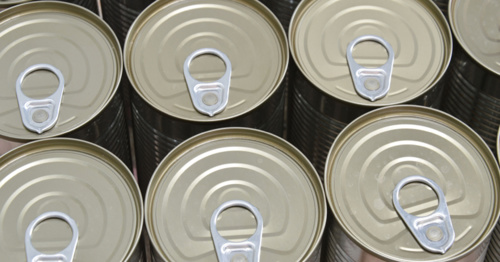
Products like cans, tubes, containers, films, caps and closures. Generally, cans are made of aluminium or steel.
a.) Aluminium is generally used for beverage cans, foils, tubes, trays, pouches, and coffee capsules. Cans are commonly used for packaging food and beverage products. They are highly recyclable and are usually coated with a layer of organic material to prevent any interaction between the food and the metal. Aluminium is harmless, lightweight, and can be recycled. It helps maintain the freshness and aroma of the foods and is good for protection from radiation, oxygen, moisture, oils, and microorganisms. Soft drinks, seafood, and pet food are commonly packaged in aluminium. For instance, aluminium foil is tested according to GSO 2515:2016.
b.) Steel is used for cans, containers, caps, and closures and can be recycled an infinitely while retaining its quality.
2.) Paper Food Packaging Material

Paper and paperboard are mostly used for packaging dry foods.
a.) Waxed or Coated paper can be used to package and serve wet and fatty food. Coated paper is commonly used in corrugated boxes, milk cartons, folding cartons, paper plates and cups, bags, and sacks, and wrapping paper.
b.) Paper board can either be in white board, solid board. Paperboard is strong and durable and can be used to package milk, fruit juices and soft drinks.
c.) Chipboard is made of recycled paper. It is used to make the outer layers of food cartons for products like cereal and tea.
d.) Fibreboard can be used to ship bulk food due to its strength and resistance to impact scratching and crushing damage.
e.) Laminated paper is coated or uncoated paper made of kraft and sulphite tissue. This paper has enhanced barrier properties, and can be used in packaging soups, spices, and herbs.
3.) Glass Food Packaging Material

Glass is well-known for being among the most reliable and least toxic materials for packaging food and drink. The advantages of glass food packaging include that it is sustainable, 100% recyclable and made from naturally occurring ingredients. Glass is reusable and refillable and has great aesthetics. Above all, glass is inert and impermeable. This means it is the most stable of all food packaging materials. Glass has no risk of harmful chemicals contaminating the food or drink.
4.) Plastic Food Packaging Material
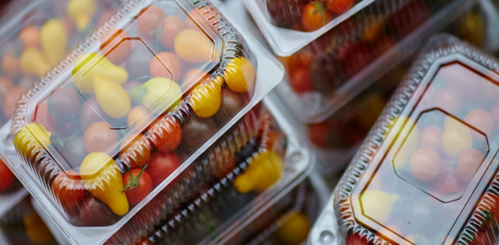
Plastics are the most common and widely used food packaging material. Popular plastic packages include bottles, trays, bags, foils, cups, pots, pouches, and bowls. Plastic is a low-cost packaging material that is easy to process, malleable, chemical resistant, lightweight, and a variety of other properties. Plastic food packing is subject to GSO 1863/2013.
How to import food packaging material in Nigeria

A manufacturer wishing to import food processing and packaging material into Nigeria must register with the following agencies:
- SON (Standard Organisation of Nigeria).
- NAFDAC (National Agency for Food and Drug Administration and Control).
- CAC (Corporate Affairs Commission).
- Federal & State Ministries of Health.
The Standard Organisation of Nigeria (SON) recently renewed its partnership with Cotecna. As such, Cotecna is accredited to issue Product Certificates and SONCAP certificates for imported products like Food Packaging Material and Industrial Machinery for making the packages into different sizes and shapes.
The Product Certificate is the first certificate issued towards obtaining a SONCAP certificate. The Product Certificate is valid for 6 months and for only one shipment. However, a registered Product Certificate is valid for a year and can be used for multiple shipments. A Product Certificate is also used in the opening of a Form M. In turn, a Form M is issued to the exporter. To apply for a Form M, the applicant must submit the manufacturer's ISO certificate, the product test report and pictures along with the Product Certificate.
The SONCAP Certificate is a Certificate of Conformity mandatory for obtaining a Pre-Arrival Assessment Report for customs clearance processing with Nigerian Customs. To apply for the PAAR the importer needs the SONCAP, Product Certificate, Form M, Bill of Lading, Commercial Invoice, and Packing List. To request for a Product Certificate and SONCAP Certificate, please contact us.
About Cotecna
For over 50 years, we have been supporting agriculture, food and pharma, minerals and metals, and consumer products supply chains all over the world. We provide testing, inspection, and certification services to help our clients navigate evolving regulations, ensure product compliance, and support their sustainability journey.